When to go to Cambodia, month by month
Cambodia has three seasons and only one of them is sold honestly. This page says what each month actually feels like on a temple day, including the months we would talk you out of.
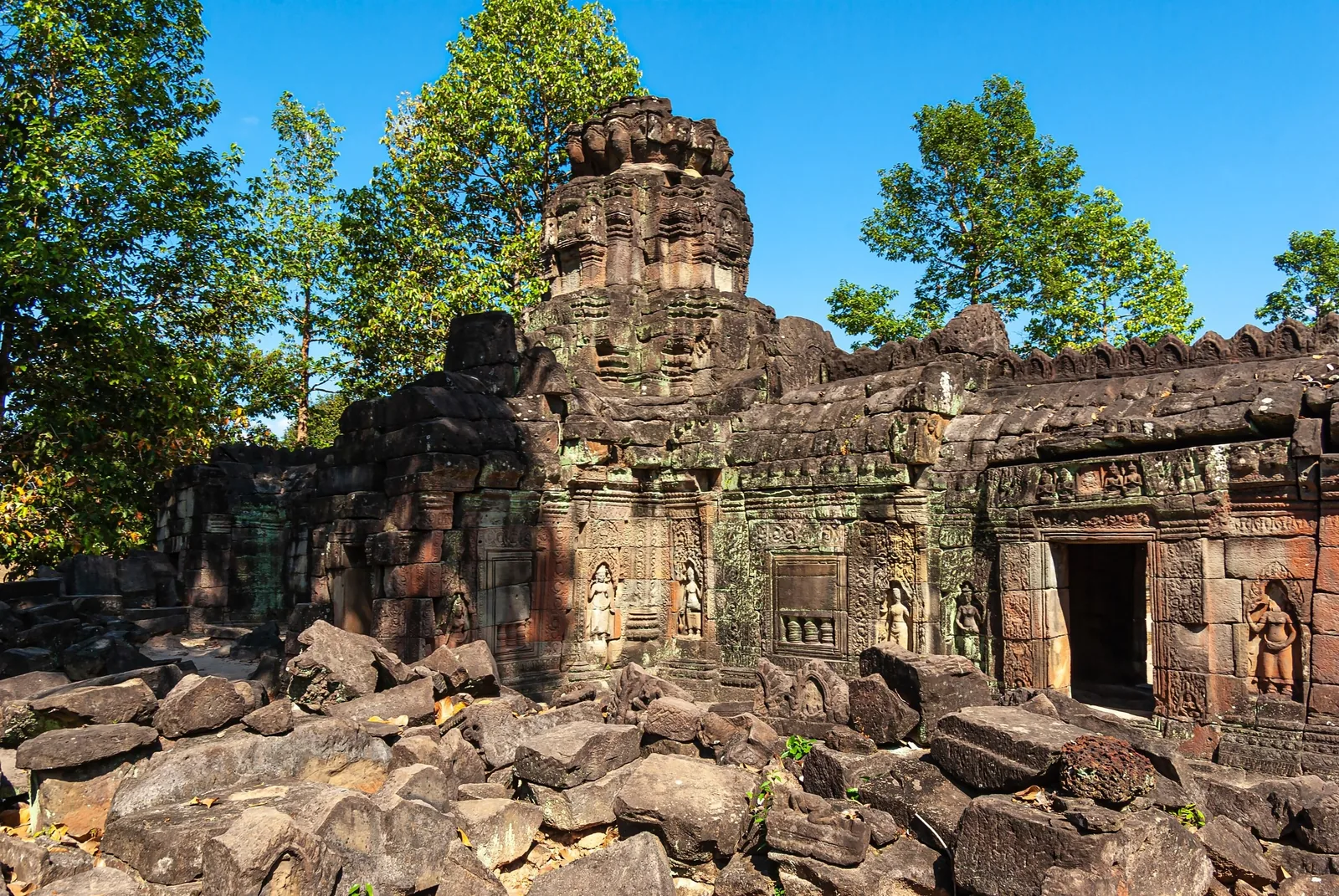
Three seasons, not two
The brochure version is 'dry season good, wet season bad'. It is wrong in both directions and it costs people either money or comfort.
| Season | Months | What it is really like |
|---|---|---|
| Cool and dry | November - February | 24 - 32 degrees, low humidity, blue skies, and every hotel full. The best weather and the worst crowds and prices. |
| Hot and dry | March - May | 34 - 40 degrees. April is the hard one: Siem Reap regularly hits 38 - 40 in the afternoon and the stone radiates heat back at you until dark. |
| Wet | June - October | Warm, green, and rain in concentrated bursts rather than all day. September and October are the wettest. Prices fall by a quarter or more. |
Rain in Cambodia is usually one or two heavy hours in the afternoon, not a grey day. A wet-season temple morning is often cooler, greener and emptier than a January one. What the wet season genuinely ruins is unsealed road: Mondulkiri, Koh Ker and the Cardamoms turn slow and slippery from July to October.
Month by month, with what we would actually book
| Month | Temples | Coast | Forest and back roads | Our verdict |
|---|---|---|---|---|
| January | Excellent | Excellent | Good | Best all-round month. Book early. |
| February | Excellent | Excellent | Good | As good as January, marginally warmer. |
| March | Warm but fine | Very good | Good, dusty | Underrated. Crowds thin from mid-month. |
| April | Hard | Hot but bearable | Very dusty | The month we talk people out of. |
| May | Hot, first storms | Mixed | Good until late May | Cheap. Start early, stop at noon. |
| June | Good | Mixed | Getting soft | Green, quiet, good value. |
| July | Good | Poor | Difficult | Fine for temples, wrong for the coast. |
| August | Good | Poor | Difficult | As July. Rivers high and photogenic. |
| September | Good, wet | Poor | Avoid | Tonle Sap at maximum. Best month for the lake. |
| October | Good, wet early | Improving late | Poor | Improves sharply after the 20th. |
| November | Excellent | Excellent | Excellent | The sweet spot. Dry, green, not yet packed. |
| December | Excellent | Excellent | Very good | Peak. Christmas prices are real. |
April, said properly
April is the hottest month in a hot country, and it is also Khmer New Year, which falls in the middle of it. Both facts matter and they point in opposite directions.
The heat is not an inconvenience, it is a constraint on the itinerary. At 39 degrees a temple day has two usable windows, roughly 06:00 to 10:00 and 15:30 to sunset, and anything you schedule in between will be endured rather than enjoyed. We do run April trips, but we build them around those windows, which means an earlier start than most people expect and a genuine break in the middle of the day.
Khmer New Year, usually 13 to 16 April, is the single best cultural moment of the Cambodian year and the single worst week for logistics. The country moves: Phnom Penh empties, the provinces fill, domestic transport books out, and many restaurants and small museums close for three or four days. If you want to see it, come for it deliberately and accept that the temple schedule bends around it.
The Tonle Sap has its own calendar
The lake is the reason to think about season separately from weather. In September and October the Tonle Sap is at maximum extent, the flooded forest is genuinely flooded, and the stilt villages sit in water. In April and May the same villages stand on dry cracked mud twenty metres above a shrunken channel, and a boat trip becomes a long drive to a disappointing puddle.
If a floating village matters to you, come between August and December. If you are here in the dry months, we will usually suggest you skip it rather than sell you a boat ride that is not worth the morning.
Crowds, which move independently of weather
- Chinese New Year, late January or February: Siem Reap fills for about ten days.
- Christmas and New Year: the most expensive fortnight of the year, hotels at 150 to 200 percent of November rates.
- Khmer New Year, mid-April: domestic crowds, not international ones. Different feel entirely, and much more interesting.
- Pchum Ben, late September or October: a fifteen-day ancestral festival. Pagodas are busy and moving to watch; almost no foreign visitors know it is happening.
Angkor itself is crowded by hour more than by month. Sunrise at Angkor Wat is busy every single day of the year. Four in the afternoon at Preah Khan is quiet even in December.
What we would book, if it were our own holiday
- Late November: dry, still green from the rains, prices not yet at Christmas levels.
- Early March: warm, thinning crowds, good light, coast still perfect.
- Mid-September, if the Tonle Sap and green rice terraces are what you want, and you accept an afternoon of rain most days.
Whichever month you pick, the itinerary should change to suit it. Which is the argument for reading how many days you need next.
Questions travellers ask most
Is the wet season really a bad time for Angkor?
No. It is often the better time. Rain falls in concentrated afternoon bursts, mornings are cooler than in the dry months, the moats are full and the stone is dark and photogenic. What you lose is guaranteed sunsets and easy access to unsealed roads.
What is the single worst month?
April, on heat alone, and July to September if your trip includes Mondulkiri, Koh Ker or the Cardamoms, because the roads there are unsealed.
When is the Tonle Sap at its fullest?
September and October. The lake can grow to several times its dry-season size, and the flooded forest at Kampong Phluk is only genuinely flooded in those months. By April the same villages stand on dry mud.
Does it rain all day in the wet season?
Rarely. A typical wet-season day gives you a clear morning, a heavy hour or two in the afternoon, and a bright evening. Plan temples early and you will barely notice it.
Read next
Tell us what you want out of Cambodia
Dates, party size and the places you care about are enough to start. You get a draft route and an indicative price, not a brochure.