Angkor, hour by hour
Four hundred square kilometres, more than seventy temples, and one park where the difference between a good day and a bad one is entirely a matter of what time you are standing where.
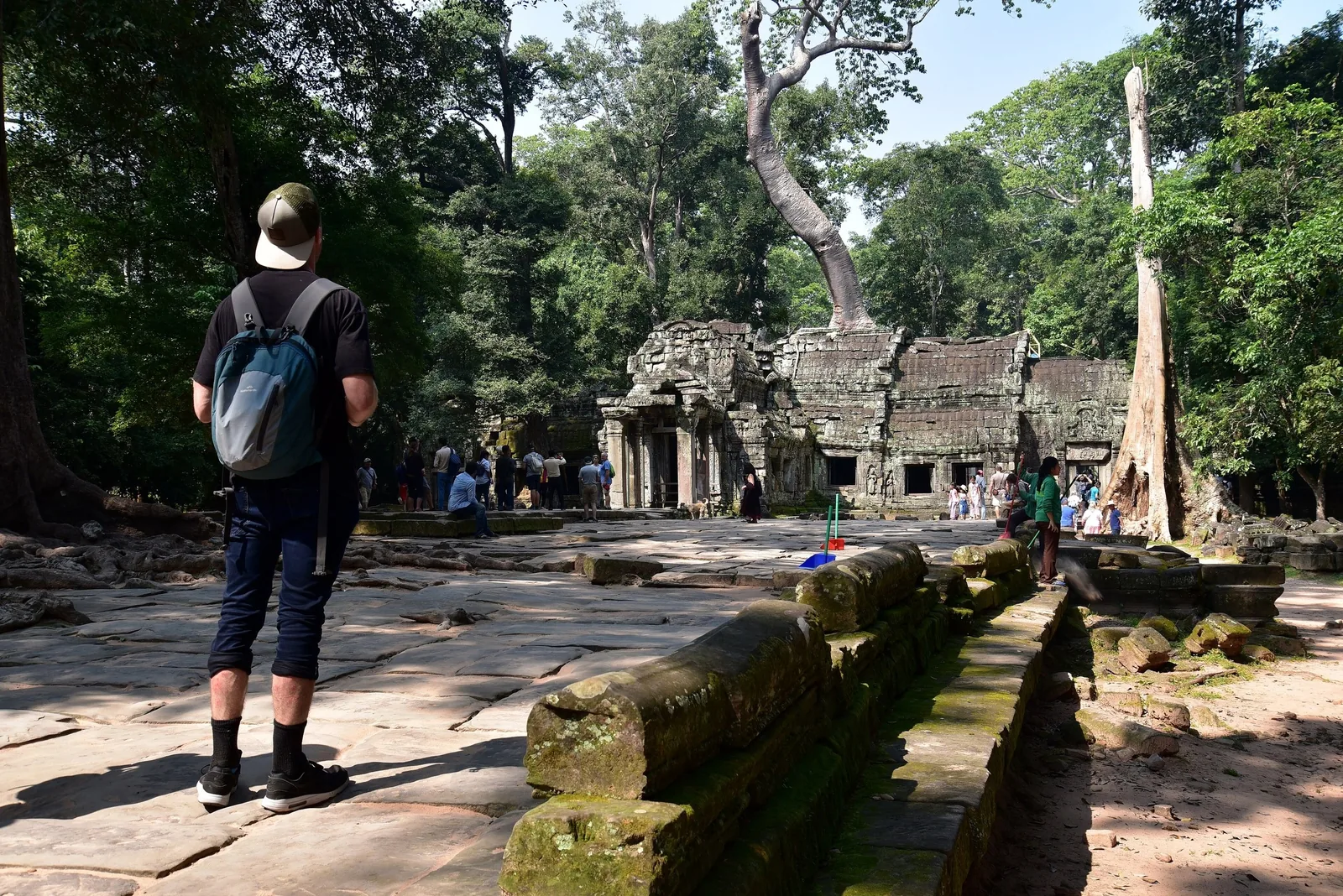
What Angkor actually is
| Size | About 400 square kilometres of protected park, 7 to 20 km from Siem Reap |
| Built | Roughly 9th to 15th centuries; Angkor Wat completed around 1150 |
| Status | UNESCO World Heritage since 1992, and a living religious site |
| Ticket | USD 37 for one day, USD 62 for three, USD 72 for seven |
| Ticket office | 04:30 to 17:30, or online at ticket.angkorenterprise.gov.kh |
| Realistic visit | Two full days minimum, three to do it without hurrying |
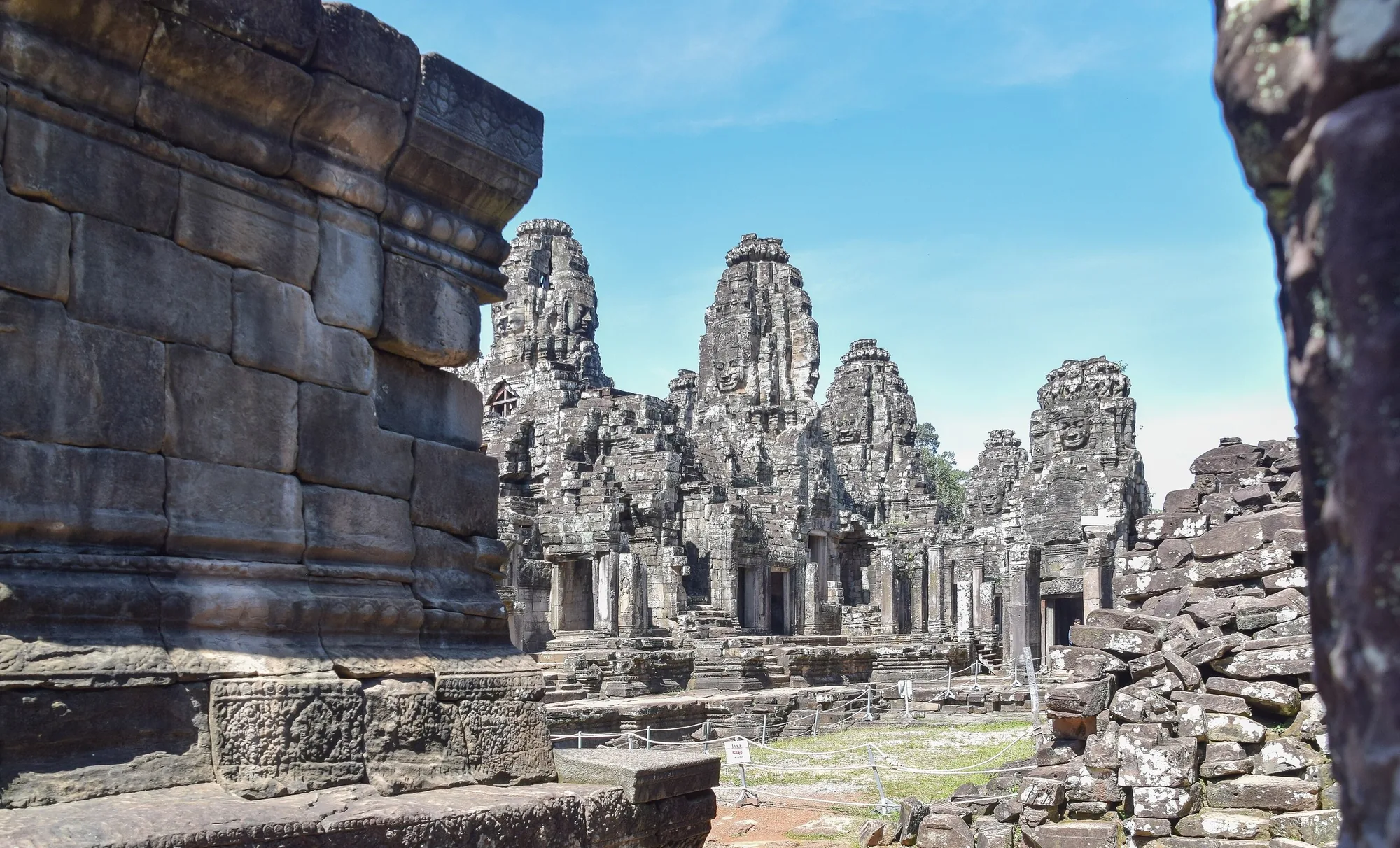
The first thing to correct is scale. Angkor is not a site, it is a city the size of a modern European capital, with temples scattered across it and roads and forest in between. The famous silhouette is one building in it. Bayon, with its face towers, is three kilometres away inside a different walled city, and Banteay Srei is 37 km further out again.
The second is that it is not a ruin in the museum sense. Monks live and teach in several of these enclosures, people pray at the shrines, and the offerings on the altars were left this morning.
Tickets, precisely
| Pass | Price | Valid | Who it suits |
|---|---|---|---|
| 1 day | USD 37 | One calendar day | A stopover, and almost nobody else |
| 3 day | USD 62 | Any 3 days within 10 | Nearly everyone |
| 7 day | USD 72 | Any 7 days within 30 | Photographers, and returning visitors |
It does not have to be three consecutive days. Two half-days at the cool ends of the day, then a rest, then two more, costs the same as one exhausting run. This is the single most useful thing to know about visiting Angkor.
- Buy online at ticket.angkorenterprise.gov.kh or at the main ticket office, which is on the road out of town and not at the temples themselves.
- Your photograph is printed on the pass. It is checked at every temple and is not transferable.
- Buy a one-day pass after 17:00 and it is valid that evening and the whole of the next day, which is how you see a sunset for free.
- Children under twelve are free with a passport as proof of age.
- Beng Mealea is covered by the Angkor pass. Koh Ker is not, and costs a separate USD 15 in cash.
Which temple at which hour
This is where a good guide earns their fee, and it is not complicated enough to be a secret. Angkor's crowds are almost entirely a function of the hour.
| Hour | Where to be | Where not to be |
|---|---|---|
| 05:00 - 06:30 | Srah Srang or the Bayon east gate | The Angkor Wat reflecting pools |
| 06:30 - 09:00 | Angkor Wat interior, Ta Prohm | Nowhere; this is the good window |
| 09:00 - 11:00 | Preah Khan, Ta Som, Neak Pean | Ta Prohm, Bayon |
| 11:00 - 15:00 | Lunch, hotel, museum, a swim | Anywhere with stone underfoot |
| 15:00 - 17:00 | Banteay Srei, Banteay Samre | Angkor Wat's west causeway |
| 17:00 - 18:00 | Bayon, Pre Rup, or Angkor Wat's east side | Phnom Bakheng |
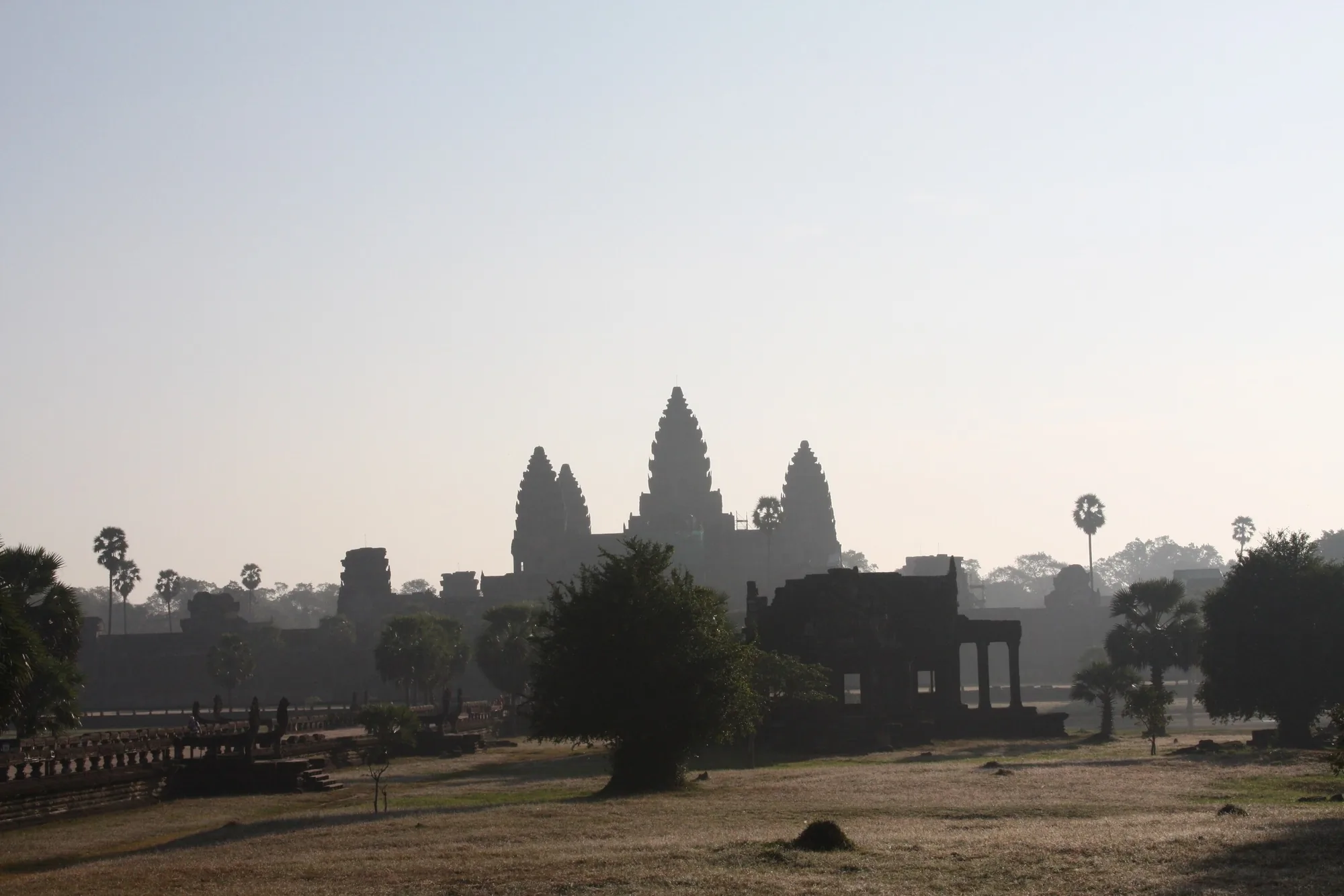
Sunrise at Angkor Wat is genuinely worth doing once, and there will be somewhere between one and three thousand people doing it with you. Go on your second morning rather than your first, when you know where to stand, and leave by 07:00 while everyone else queues for breakfast.
Phnom Bakheng at sunset is the one we actively steer people away from. It has a visitor cap, a queue to reach the top, and a view that is better from Pre Rup with a tenth of the people.
The temples that reward the time
Beyond the obvious three, these are the ones our guides push hardest for, and none of them is crowded.
- Preah Khan: a monastic city of long, collapsing corridors and one two-storey building that nobody has convincingly explained. Quiet at almost any hour.
- Banteay Srei: small, pink sandstone, and carved to a level of detail that nothing else at Angkor approaches. Worth the 37 km drive, at 08:00 or after 15:30.
- Ta Som and Neak Pean: fifteen minutes each, on the same loop, and almost empty.
- Beng Mealea: 65 km east, an unrestored temple collapsed into forest, and what Ta Prohm was before the walkways.
- Bakong and the Roluos group: ninth century, pre-dating central Angkor by two hundred years, and the first Khmer temple mountain in stone.
Practicalities that change the day
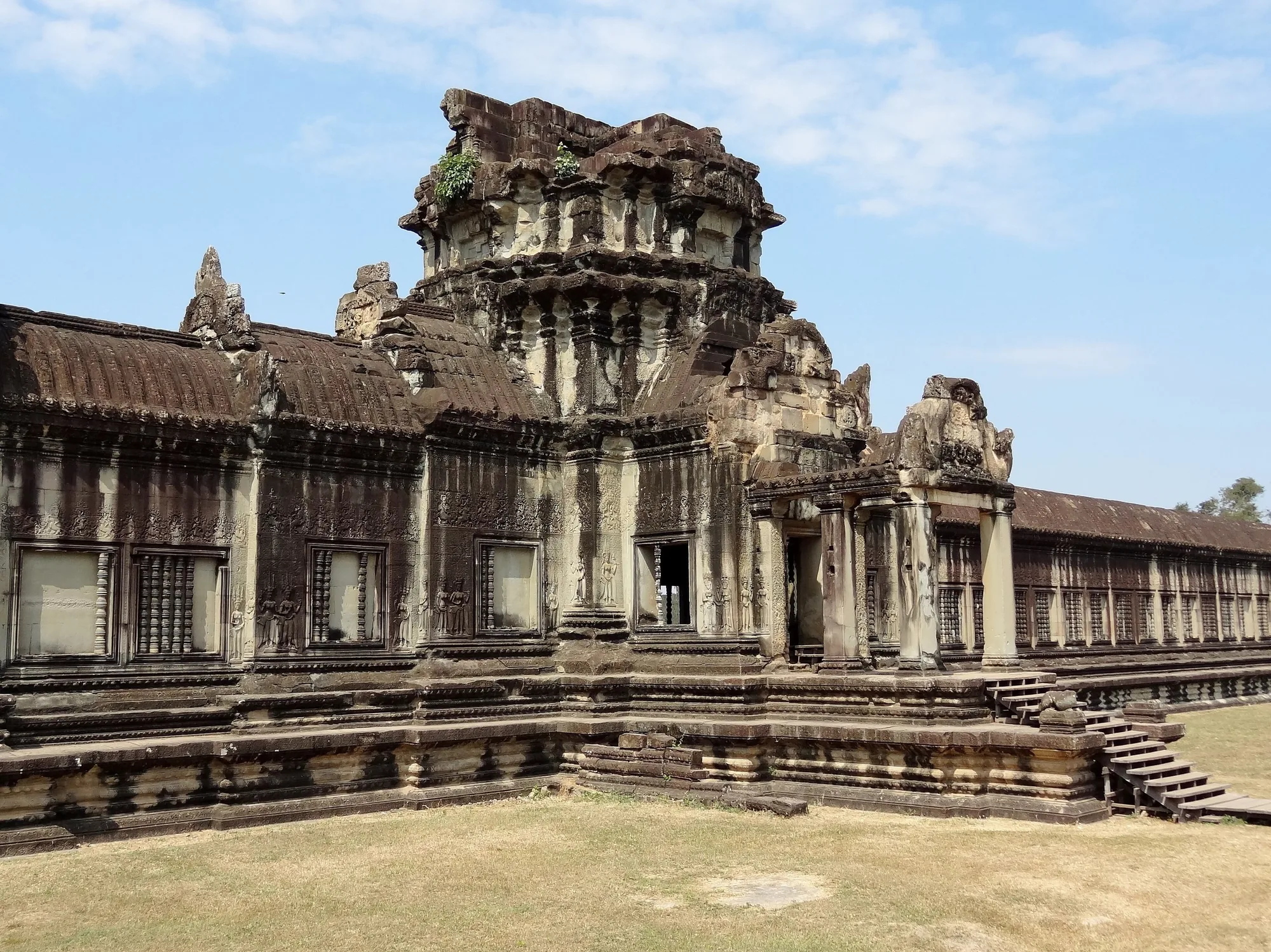
- Dress code: shoulders and knees covered. It is enforced at the upper level of Angkor Wat and refused entry is routine, not a warning.
- Water: carry two litres per person per half day. There are stalls, but not inside the enclosures where you need it.
- Footwear: the original staircases are steep and worn, and laterite is uneven. Trainers, not sandals.
- Toilets exist at the major temples and nowhere in between.
- Drones need permission and flying without it is how people lose drones.
The Angkor National Museum in Siem Reap is the standard 11:00-to-15:00 answer on a hot day, and it is genuinely good on the sculpture, which the park itself cannot show you because most of it has been moved for safekeeping.
When to skip Angkor, or part of it
Angkor is the exception to almost every 'is it worth it' question in Cambodia. Even so, there are honest cases against parts of it.
- If you have one day only, do not attempt the full circuit. Angkor Wat, Bayon and Ta Prohm at the right hours is a complete day; adding Banteay Srei to it is 90 minutes of driving you will resent.
- If you cannot manage steep uneven steps, the upper level of Angkor Wat and the towers of Pre Rup are not accessible, and no amount of goodwill fixes that. There is still a full and excellent trip to be had at ground level.
- In April, do not plan anything between 11:00 and 15:30. The stone reaches temperatures you can feel through shoes.
- If temple fatigue arrives on day three, and it often does, stop. A fourth day of carvings you cannot absorb is worse than a morning by a pool.
Tours that include Angkor
Angkor is on almost everything we run. The three that build around it are Angkor temples, 3 days, Remote temples, 5 days for Beng Mealea, Koh Ker and Preah Vihear, and Cambodia highlights, 7 days, which pairs three temple days with Phnom Penh.
Questions travellers ask most
How much is the Angkor pass?
USD 37 for one day, USD 62 for three days and USD 72 for seven. The three-day pass is valid on any three days within a ten-day window and the seven-day within a month, so you can spread visits around the heat.
Is sunrise at Angkor Wat worth it?
Once, and preferably on your second morning rather than your first. Expect one to three thousand people. The reflecting pools are the crowded spot; the north side of the causeway is calmer and the light is the same.
How many days do I need at Angkor?
Two full days covers the main enclosure and Banteay Srei. Three lets you split each day around the midday heat and add Preah Khan, Ta Som and the Roluos group without rushing. Beyond three, most people are saturated.
What should I wear?
Shoulders and knees covered, and shoes with grip. The dress code is checked at the upper level of Angkor Wat and people are turned away every day. Light long trousers are cooler than shorts in direct sun.
Read next
Tell us what you want out of Cambodia
Dates, party size and the places you care about are enough to start. You get a draft route and an indicative price, not a brochure.