Battambang, the town people add a night to
Cambodia's second city is a low-rise river town of French shophouses surrounded by rice, with the country's strongest arts scene and its most affecting hilltop. Two nights, and people wish they had booked three.
What it is
| Position | 170 km from Siem Reap, 290 km from Phnom Penh |
| Drive from Siem Reap | 3 to 3.5 hours on good sealed road |
| Nights we recommend | 2 |
| Best months | November to February; the river boat needs high water |
| Known for | Colonial architecture, arts, rice country, Phnom Sampeau |
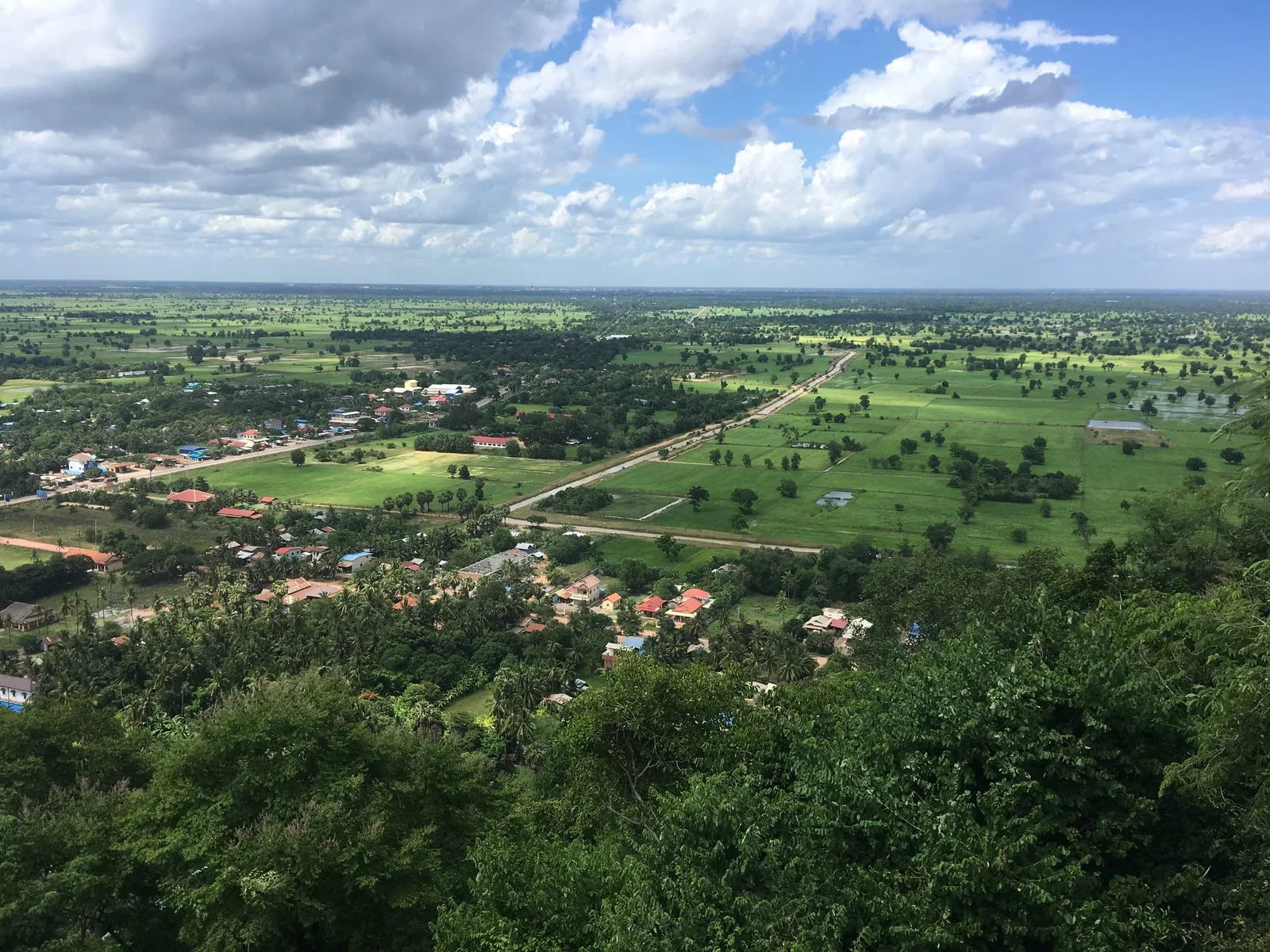
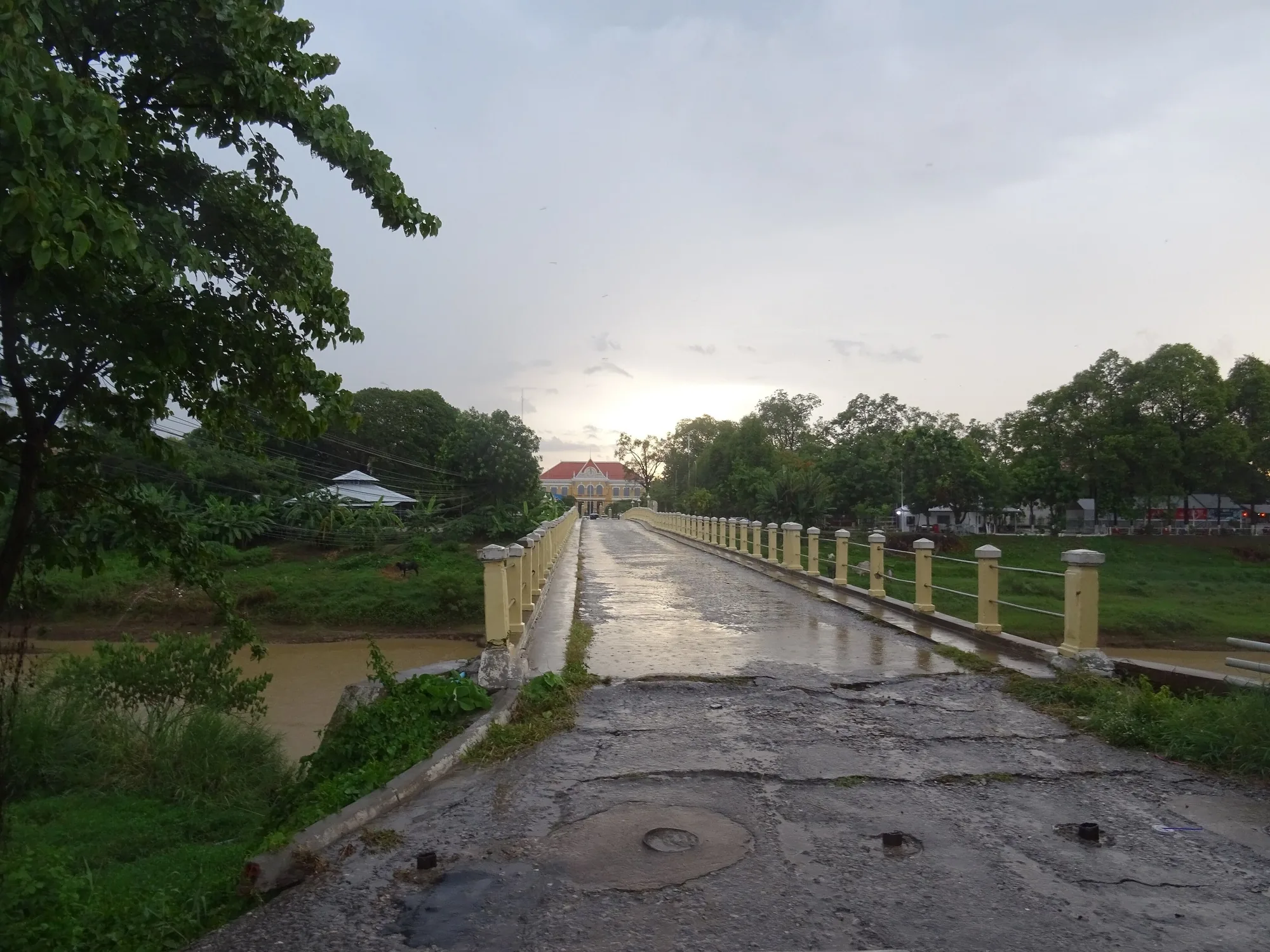
Battambang was the richest rice province of the region for a century and it shows in the buildings: two- and three-storey French-era shophouses along the Sangker river, shuttered windows, a governor's residence, and a grid of streets you can walk in a morning. Very little has been knocked down, mostly because the money that rebuilt Phnom Penh and Siem Reap never arrived here.
The town is the thing, and then the countryside around it: rice fields to the horizon, villages that make rice paper and fish paste and rice wine, and three or four hills with temples on them rising abruptly out of flat land.
Phnom Sampeau, which is two things at once
A limestone hill 12 km south-west of town. At the top are the killing caves, where people were murdered during the Khmer Rouge period and thrown through a skylight into the cavern below. There is a memorial at the bottom of the shaft with the remains. It is quiet, small, and among the most affecting places in Cambodia precisely because it has not been formalised.
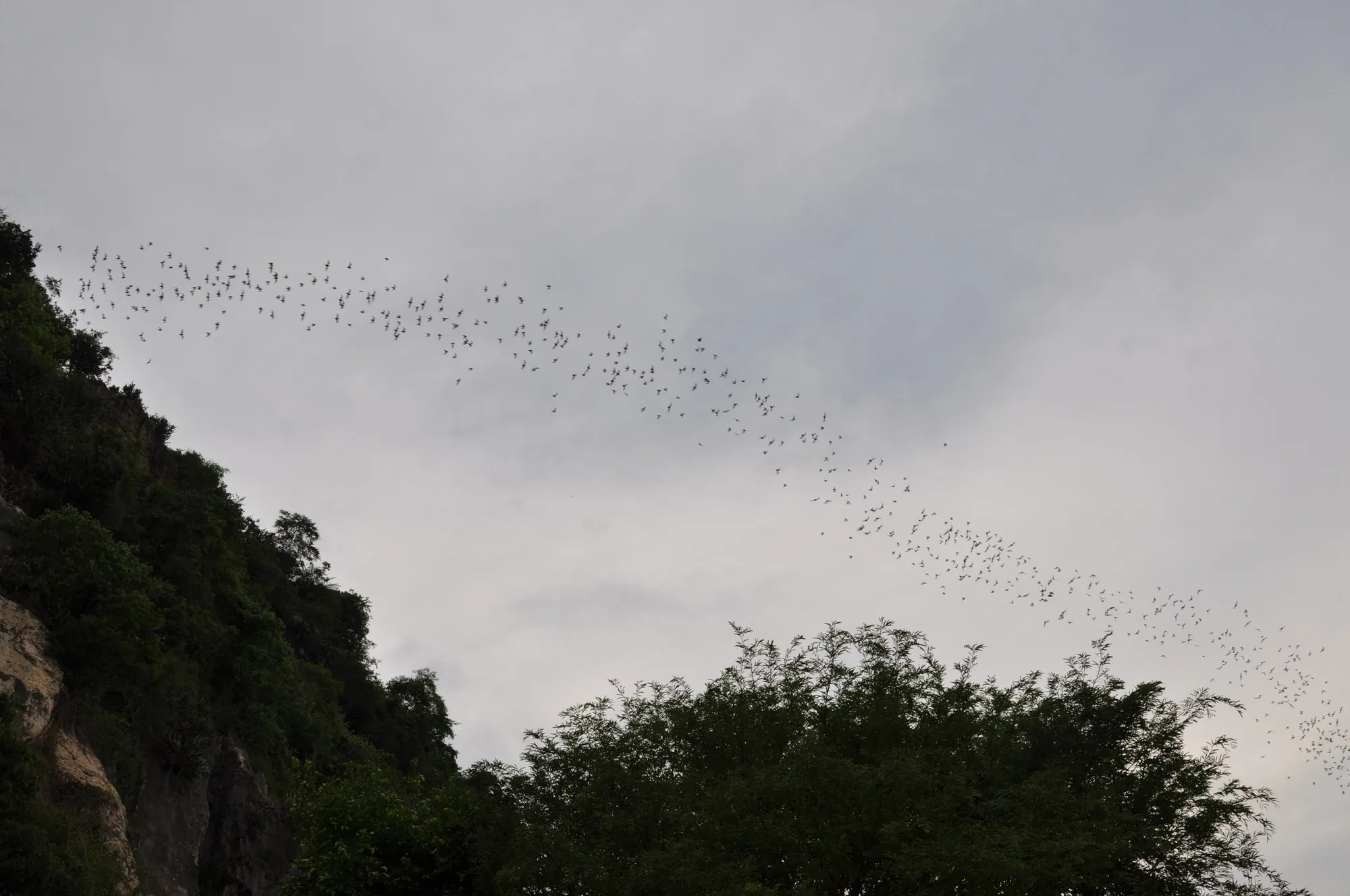
At the base of the same hill, around six in the evening, several million wrinkle-lipped bats leave a cave mouth in a continuous ribbon that takes twenty to forty minutes to pass. People sit on plastic chairs opposite with a drink and watch. It is genuinely extraordinary and it happens every single evening.
Doing both in one visit is normal and the sequence is deliberate: the caves in the late afternoon, then down the hill for the bats at dusk. It is a strange, good couple of hours.
The rest of two days
- Phare Ponleu Selpak: the arts school in Battambang that the Siem Reap circus grew out of. Performances several nights a week, and the school itself, which teaches music, drawing, theatre and circus to young people from the province, can be visited.
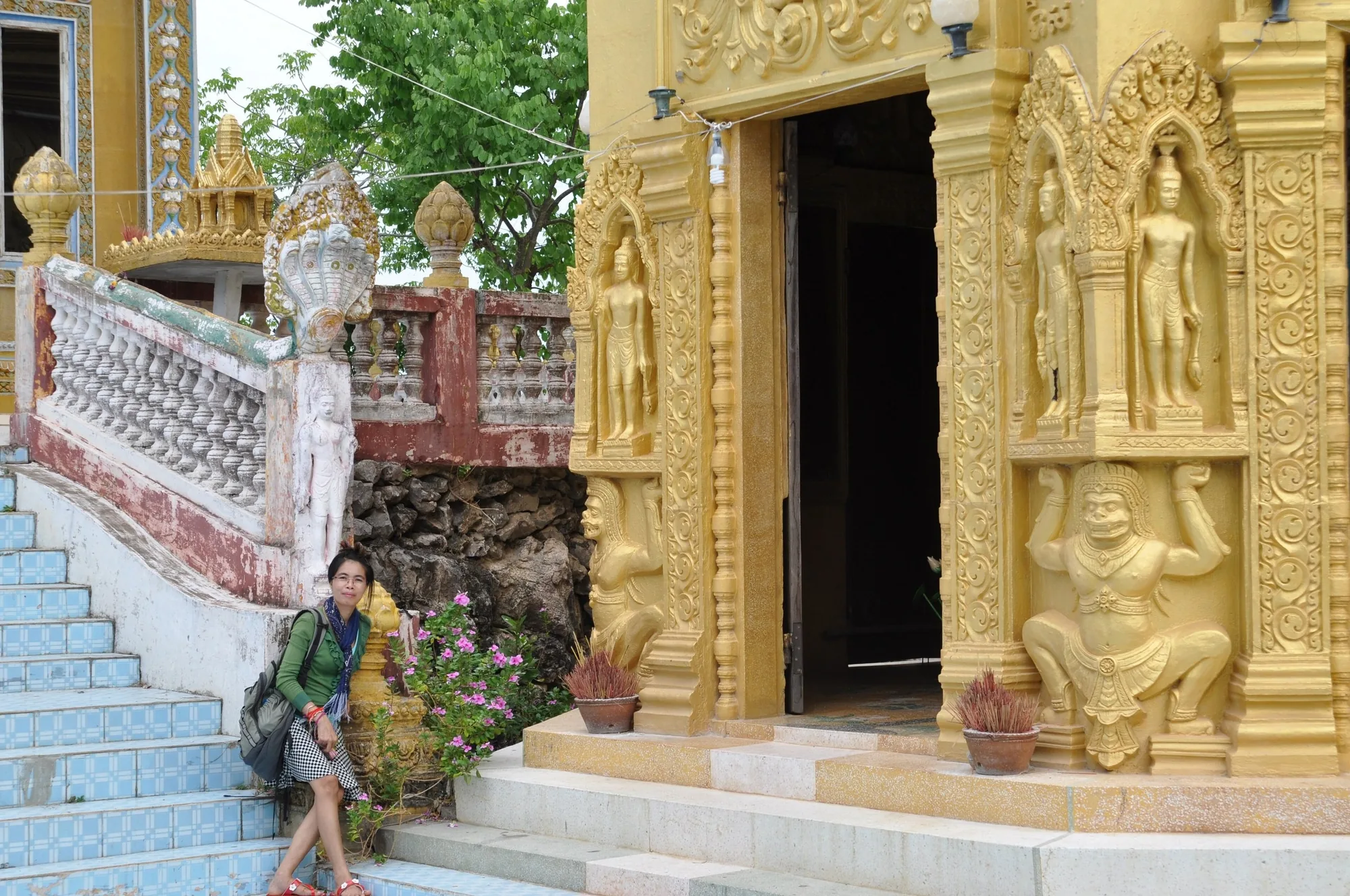
- Wat Banan: a hilltop Angkorian temple up 358 steps, with five towers and a view over rice fields. Early morning or late afternoon; midday is punishing.
- Ek Phnom: an eleventh-century temple 11 km north, half-collapsed, beside a modern pagoda. A pleasant bicycle ride from town through villages.
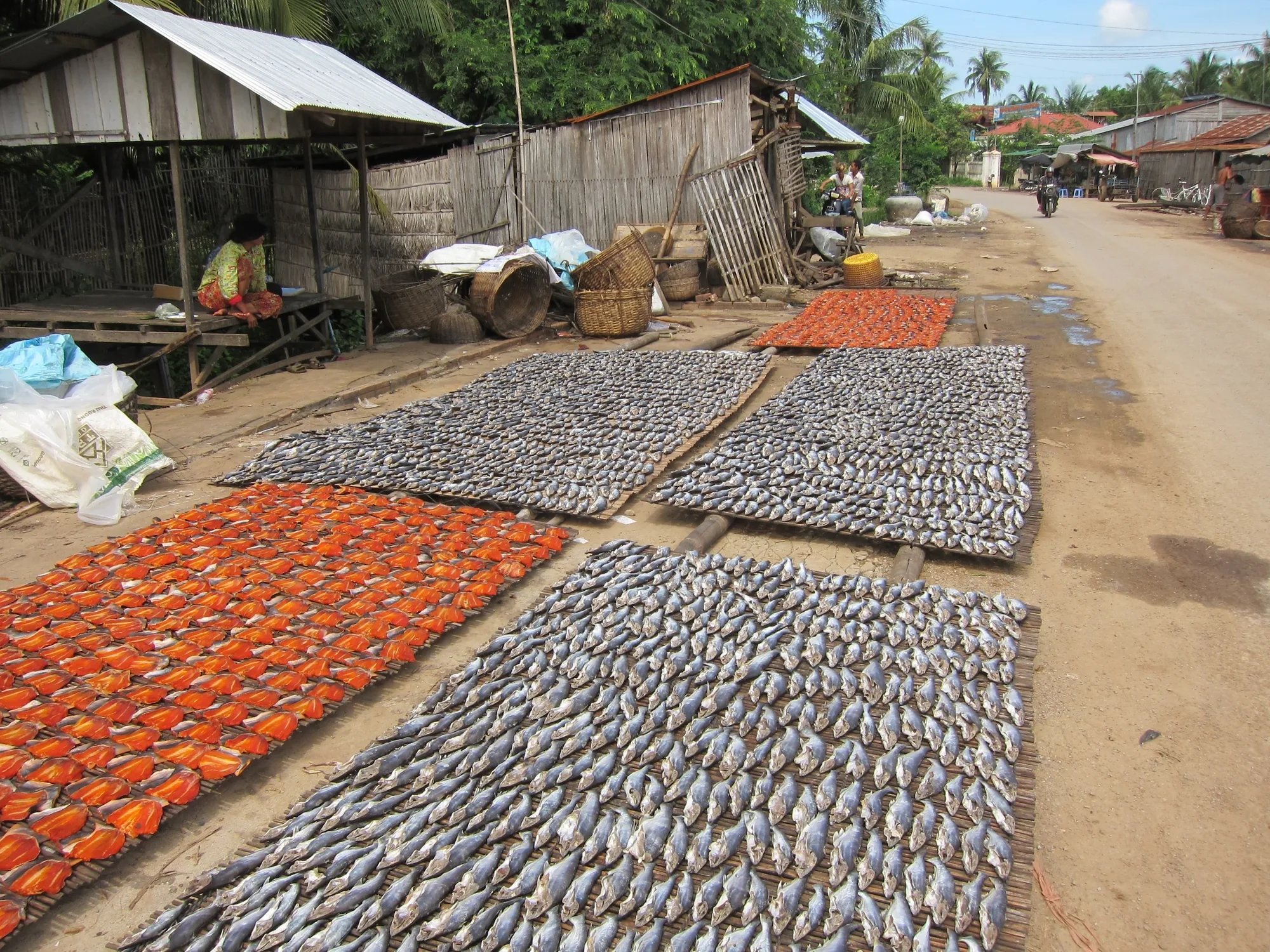
- The village workshops around Wat Kor: rice paper dried on racks, banana chips, fish paste, rice wine distilled in the yard. These are working businesses, not demonstrations, and we do not take a commission from any of them.
- The Sangker riverbank at dawn, when the town's fishermen are out and nothing is arranged for anybody.
The bamboo train, honestly
The norry, a bamboo platform on train wheels driven by a small motor, ran on the disused line outside town for years and was one of Cambodia's genuine oddities. The original line was cleared when the railway was rehabilitated, and a purpose-built version now operates near Wat Banan as a tourist ride.
Whether a stretch of the original is running in any given month changes. We check before we put it in an itinerary rather than promising it at booking and apologising later. The Banan version is fun, and it is not the same thing.
Getting there
Three to three and a half hours from Siem Reap on good road, or four and a half to five from Phnom Penh. Both are easy drives and Battambang sits naturally between them, which is why it is the obvious third stop on a seven-day route.
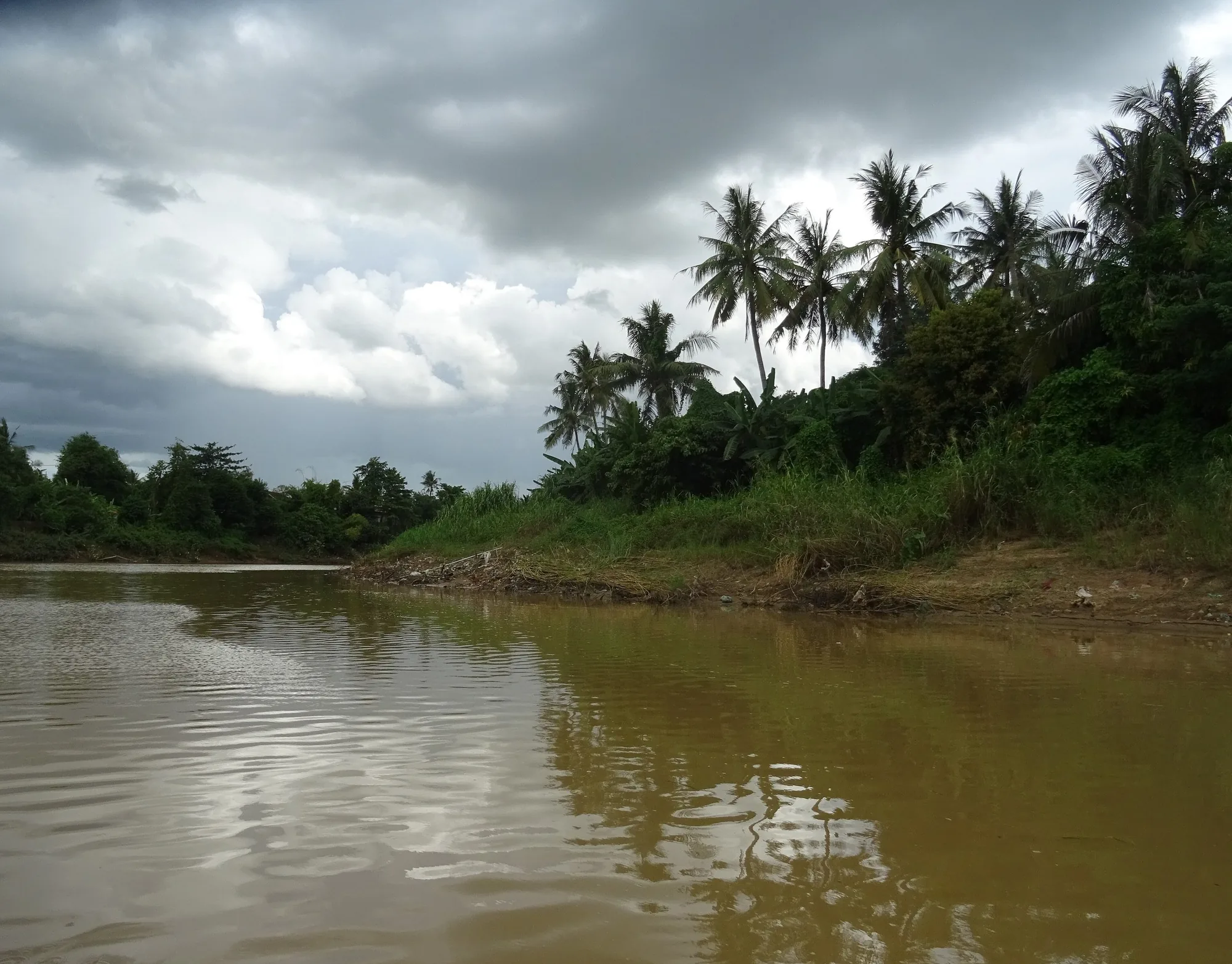
The other way in is the boat from Siem Reap: six to nine hours down the Tonle Sap and up the Sangker river through flooded forest and stilt villages, arriving in the afternoon. Between roughly September and January it is one of the best days in Cambodia. At low water the boat either does not run or finishes with a long road transfer, and then it is not worth doing.
When to skip it
- If your trip is seven days or fewer and includes both Angkor and the coast. Something has to give and Battambang is the newest addition to most routes.
- If you are only interested in Angkorian archaeology. Wat Banan and Ek Phnom are pleasant, not remarkable, and you will have seen better.
- In April, when the hill temples are hard work and the countryside is dust.
- If a one-night stop is all that fits. Battambang at one night is an evening and a morning, and the town rewards the second day much more than the first.
Tours that include Battambang
It sits in the middle of north to coast, 10 days and Cambodia in depth, 14 days, and we add it to a seven-day trip when people would rather have a town than a beach.
Questions travellers ask most
How long do I need in Battambang?
Two nights. One day for the town, the village workshops and the circus school, and one afternoon for Wat Banan or Phnom Sampeau finishing with the bats at dusk.
Is the bat cave really worth it?
Yes. Several million bats leave the same cave mouth every evening around six and the column takes twenty to forty minutes to pass. It costs nothing, it happens daily, and it is one of the few natural spectacles in Cambodia you can rely on.
Does the bamboo train still run?
A purpose-built version runs near Wat Banan. The original line outside town was cleared when the railway was rehabilitated, and whether part of it is operating changes. We check in the month you travel rather than promising it.
Is the boat from Siem Reap worth taking?
Between about September and January, yes: six to nine hours through flooded forest and stilt villages. Outside those months the water is too low and the trip becomes a long hot drive by another name.
Read next
Tell us what you want out of Cambodia
Dates, party size and the places you care about are enough to start. You get a draft route and an indicative price, not a brochure.